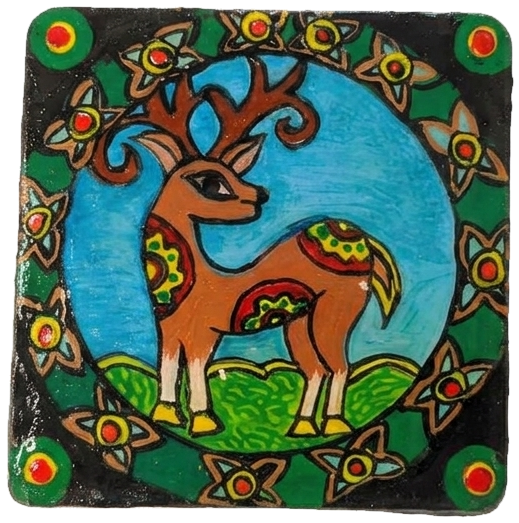
Deer
Sanskrit poets measured beauty against her eyes — mriga-nayani, "deer-eyed" — a creature that listens long before it is ever seen.
A Small Studio, Painted by Hand
Handcrafted, one piece at a time.
The First Collection
Ten small tiles, ten small myths — a menagerie painted onto black, the way these stories have always been told: in colour, from memory, one creature at a time. Every collection at Studio Dolly starts from a different spark; this one started in the wild.
Sanskrit poets measured beauty against her eyes — mriga-nayani, "deer-eyed" — a creature that listens long before it is ever seen.
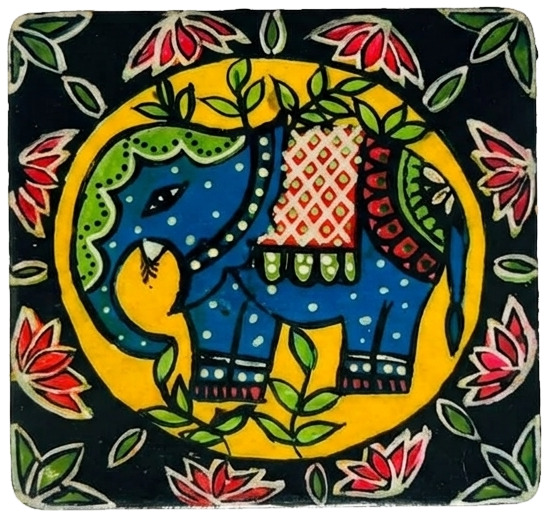
The elephant lends its form to Ganesha, remover of obstacles — a creature whose memory, in every telling, forgets nothing.
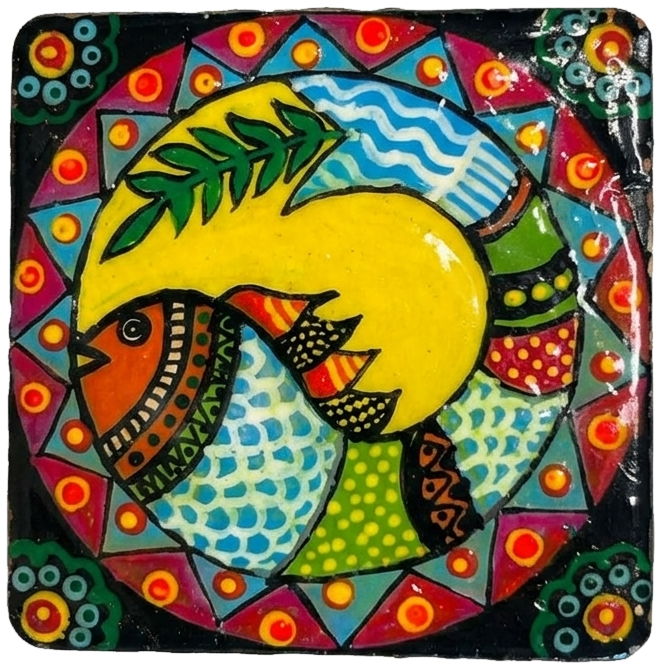
Vishnu's first descent came as a fish, Matsya, who towed Manu's boat safely through the flood that drowned the world.
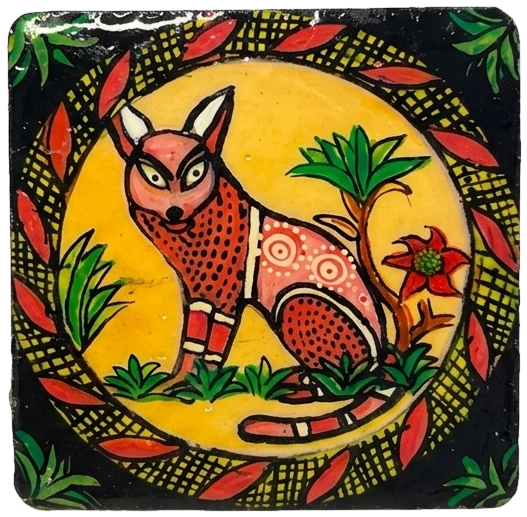
The fox owes its reputation to the Panchatantra, where wit always outlasts strength, and the smallest animal in the room is the one worth watching.
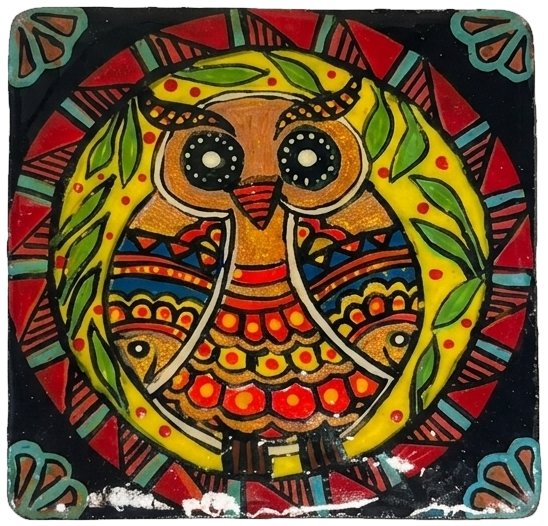
Lakshmi rides an owl by night — an unglamorous choice, until you remember it's the one creature that can find wealth in the dark.
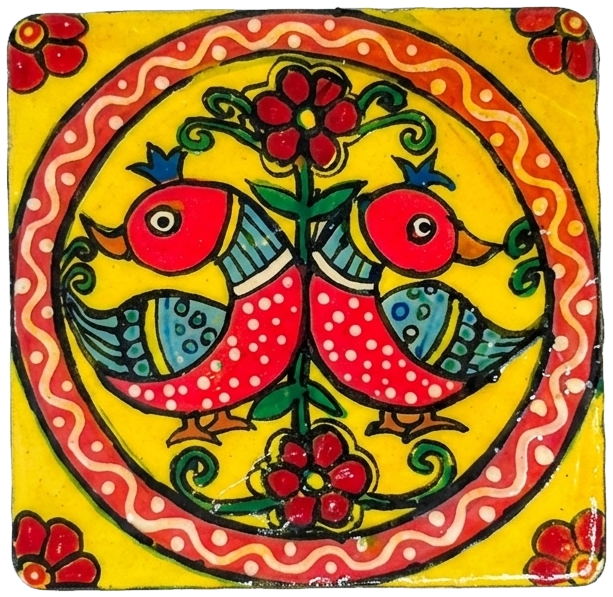
A pair of parakeets was Kamadeva's chosen escort, and across a thousand years of folk tales it's the parrot who narrates, never just watches.
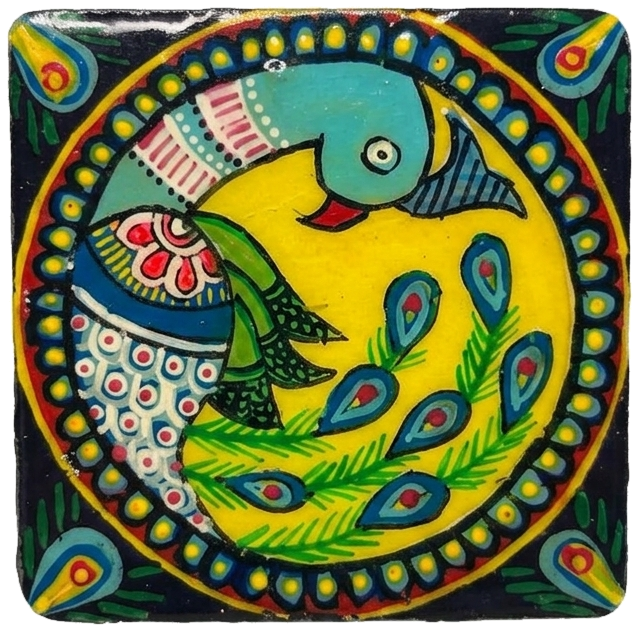
The peacock dances only for the first clouds of monsoon, and carries Kartikeya into battle — grief and glory kept in the same feather.
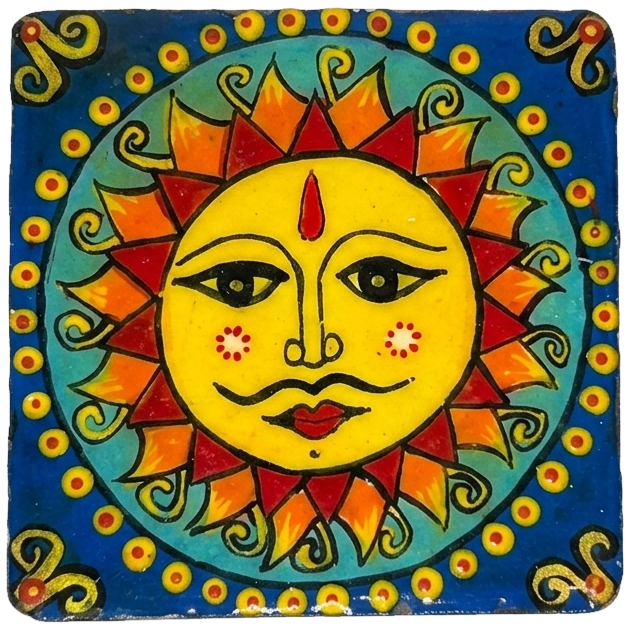
Surya crosses the sky once a day and is thanked for it every morning — the one god whose worship needs no idol, only sunrise.
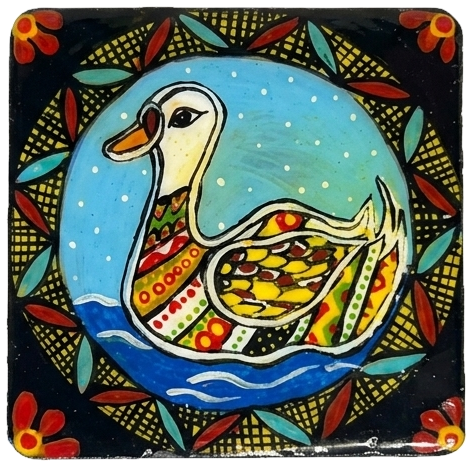
The mythical hamsa is said to drink only the milk from a bowl of milk and water, leaving the water behind — discernment, taught as a party trick.
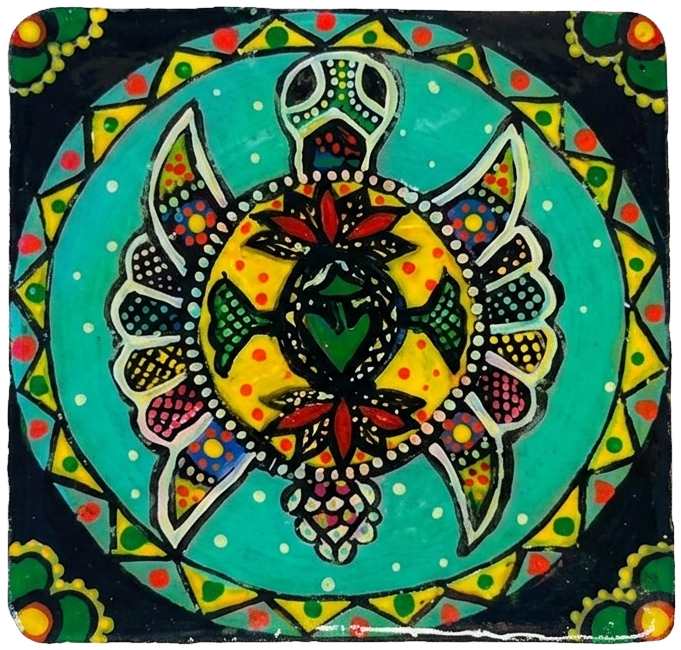
When the gods needed something steady enough to hold up a mountain, Vishnu became a turtle, Kurma, and simply stayed still.
The Second Collection
Warli painting belongs to no single artist — it's a tradition of the Warli people of the Sahyadri hills, kept for generations in white rice-paste on walls of mud and cow-dung, long before it ever touched a coaster. Thirty-four small scenes, drawn from one continuous village day: dancers circling at dusk, water carried home from the well, a tree that has always been sacred. Where Rangvan invents a myth for each creature, Warli Katha simply keeps watching — the different spark a second collection was always going to bring.
तारपाDance & Music
The tarpa dance is the one unbroken circle in Warli life — dancers moving around a central musician playing the tarpa, a gourd-horn whose single note doesn't stop until the dancers do. Drums, shehnais, and the sunburst overhead all belong to the same afternoon.
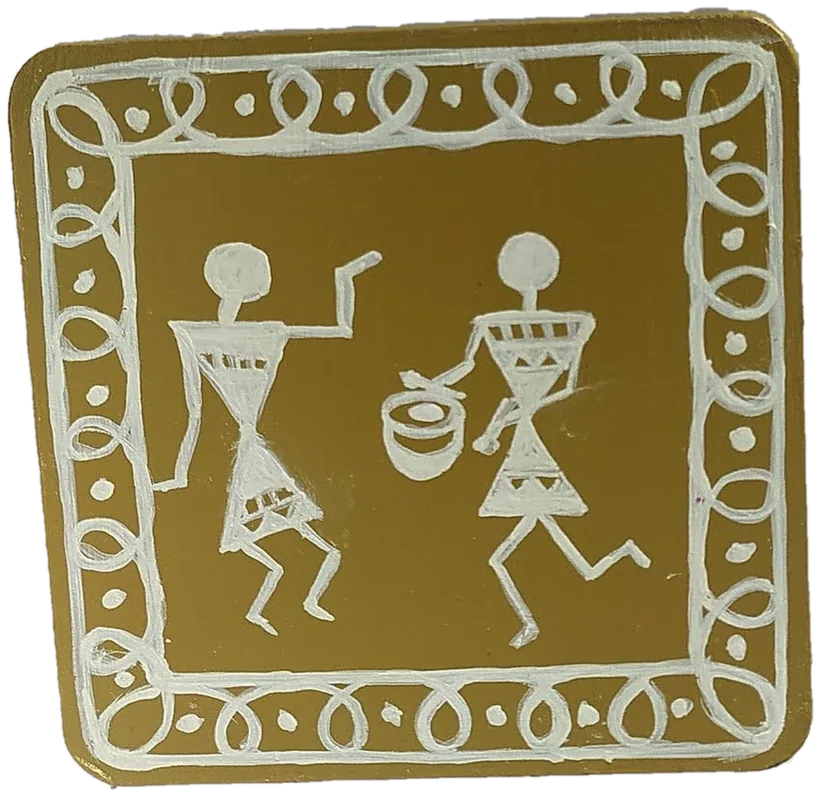
Two dancers mid-step, the drum keeping the beat they've already found.
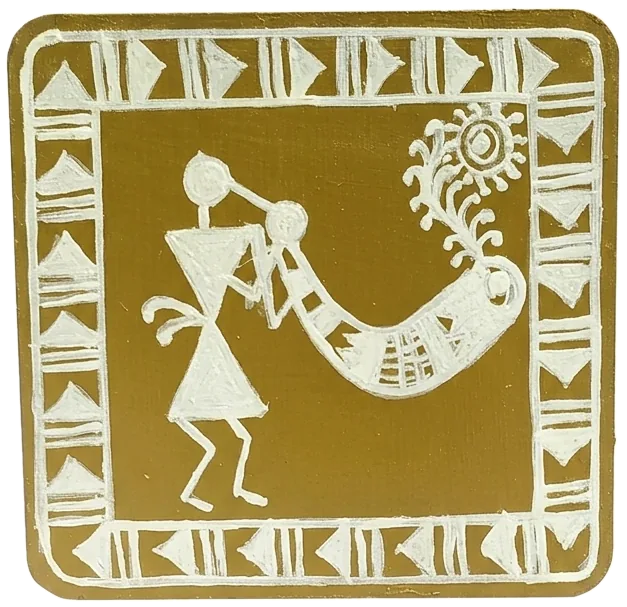
The shehnai leads the circle, and for once nobody minds being told what to do.
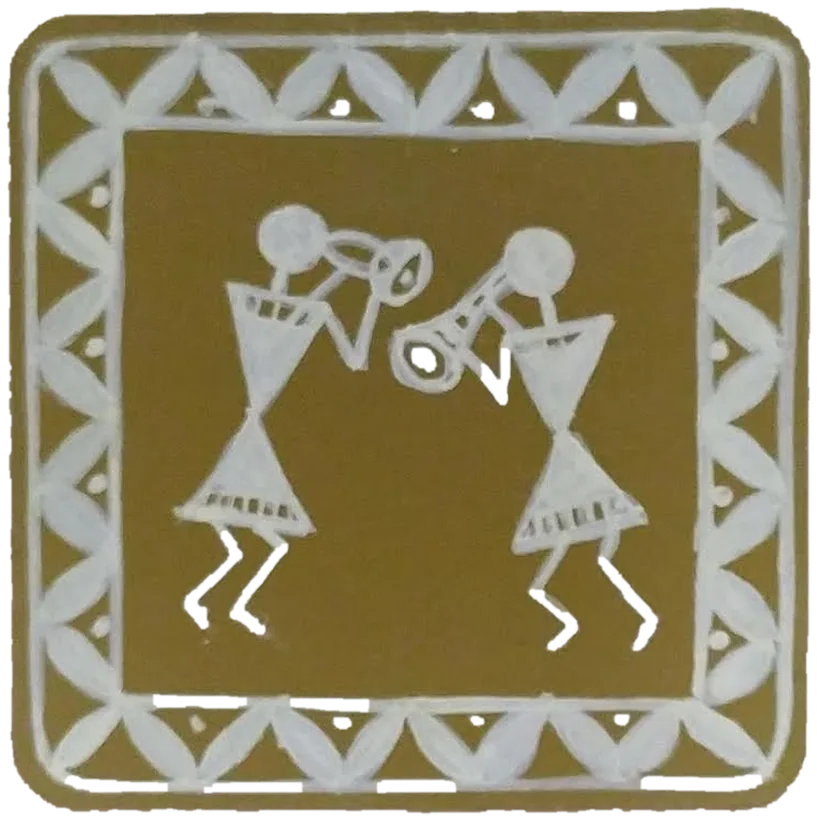
A pair of tarpa horns played less for melody than for keeping everyone circling the same centre.
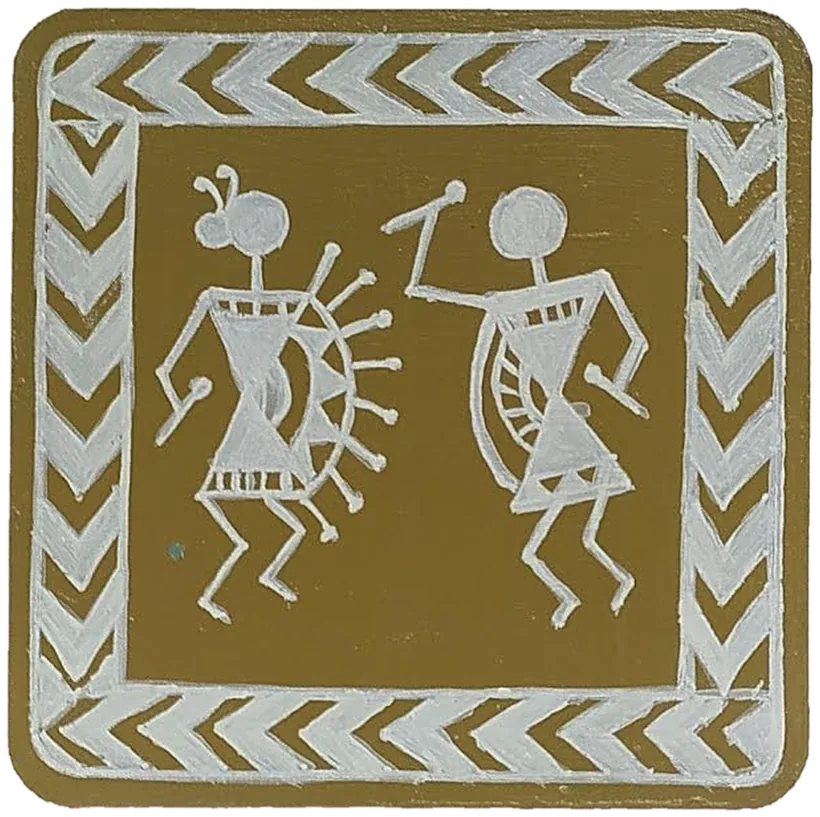
The dance and the sun above it share the same shape — neither one has a start or an end.
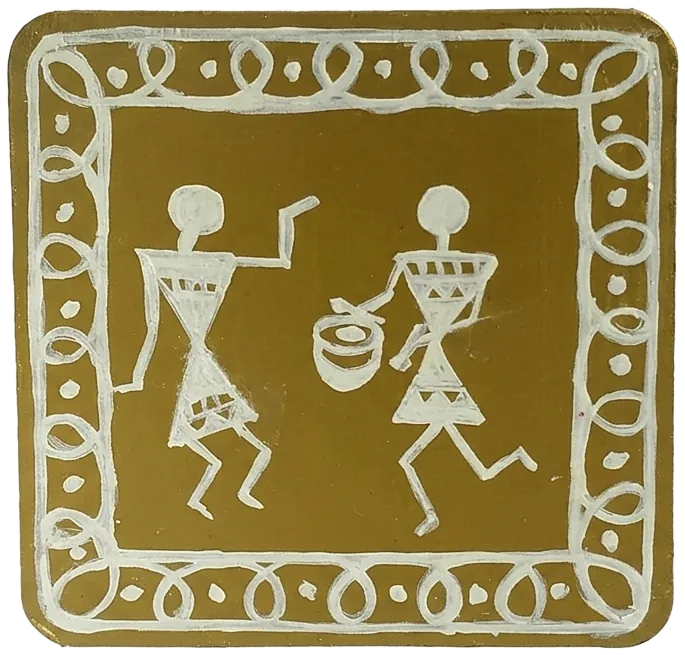
Two drums, one rhythm, and the whole village already knows which one to follow.
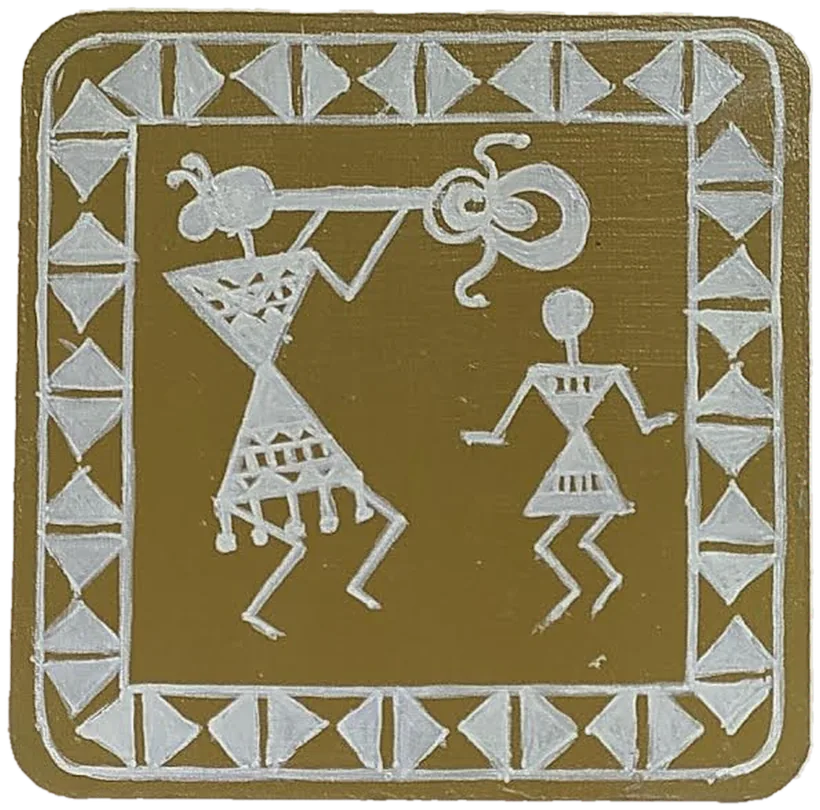
One plays, one just walks alongside — the tarpa dance always needs both.
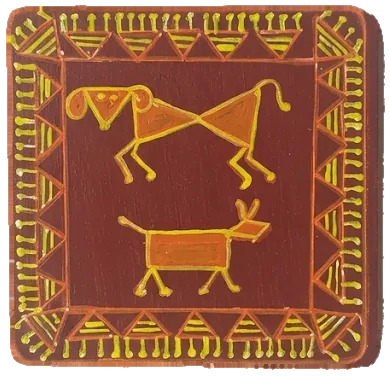
Two animals share the frame, horns up and tails thrown back — the same leaping line Warli hands give a dancer, borrowed here for four legs instead of two.
घरHome & Hearth
A Warli house is drawn the way it's built — bamboo lashed in rows, a domed thatch roof, a ladder leaning up to the loft where the year's grain waits. A tree almost always stands at the door, the way it always has.
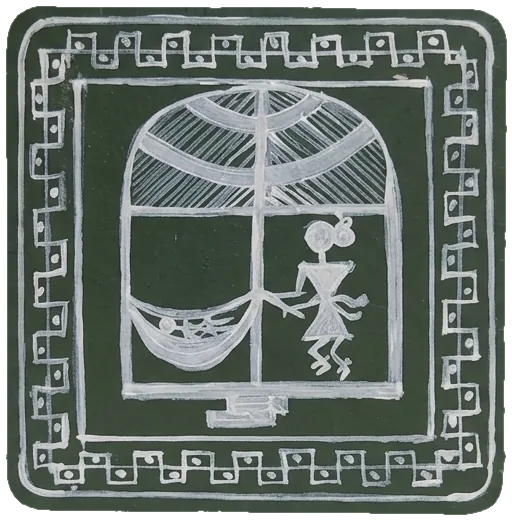
A hammock strung across a window — the one hour of the day built for doing nothing.
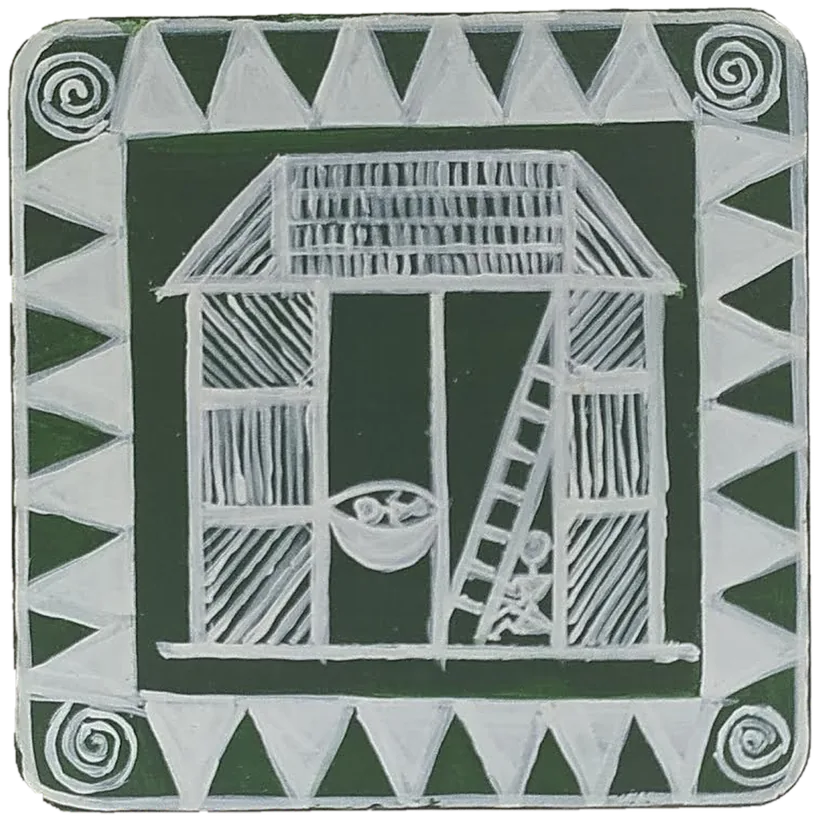
The ladder goes up to the loft; the hammock stays exactly where it is.
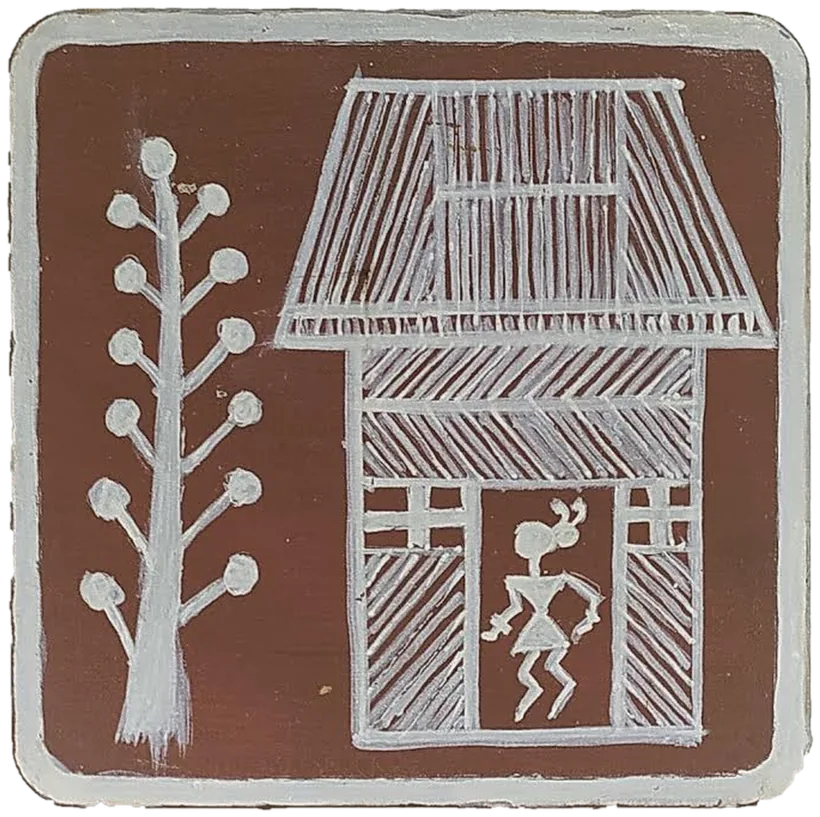
Even at home, under its own tree, a reason to dance turns up.
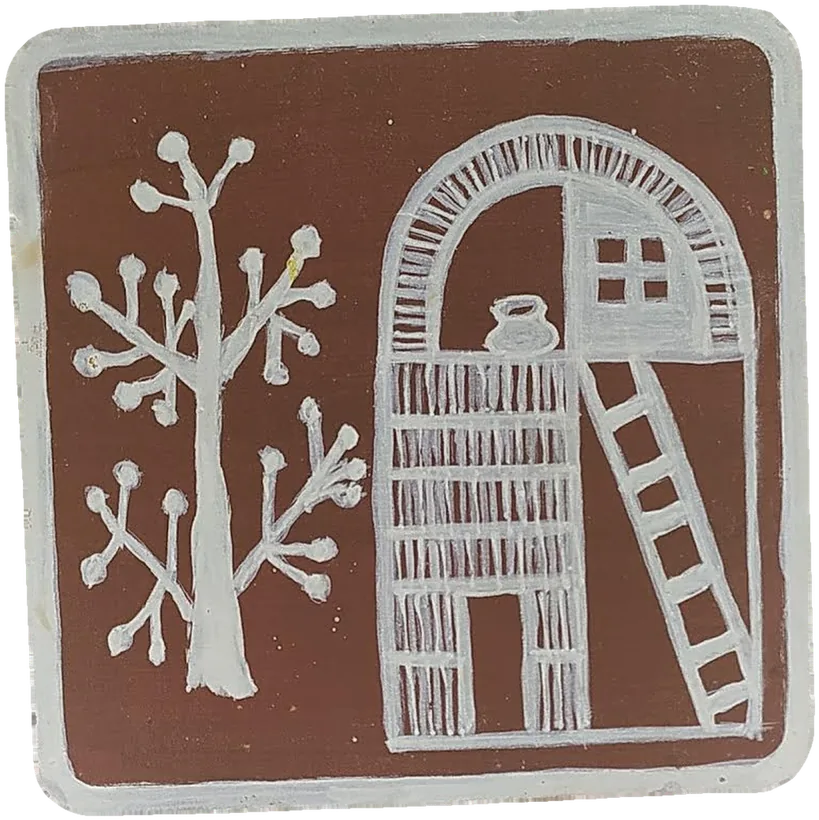
The kudmal — the granary that carries a family to the next harvest — earns a ladder, and a border, of its own.
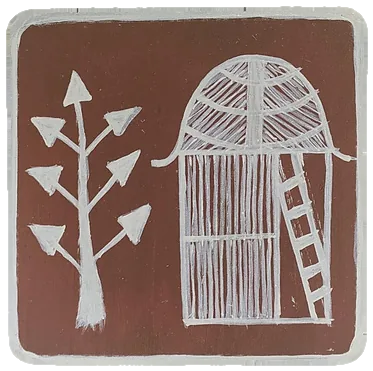
The tree beside the hut isn't decoration; a Warli house is never drawn standing alone.
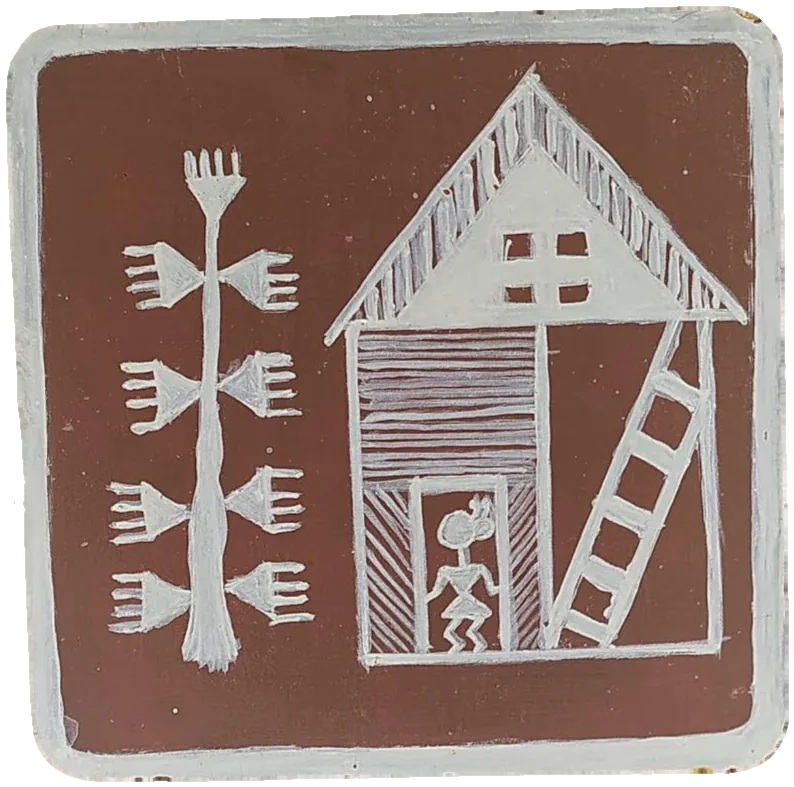
A ladder left leaning against the wall, a window left open — the kind of house drawn mid-chore, not posed for.
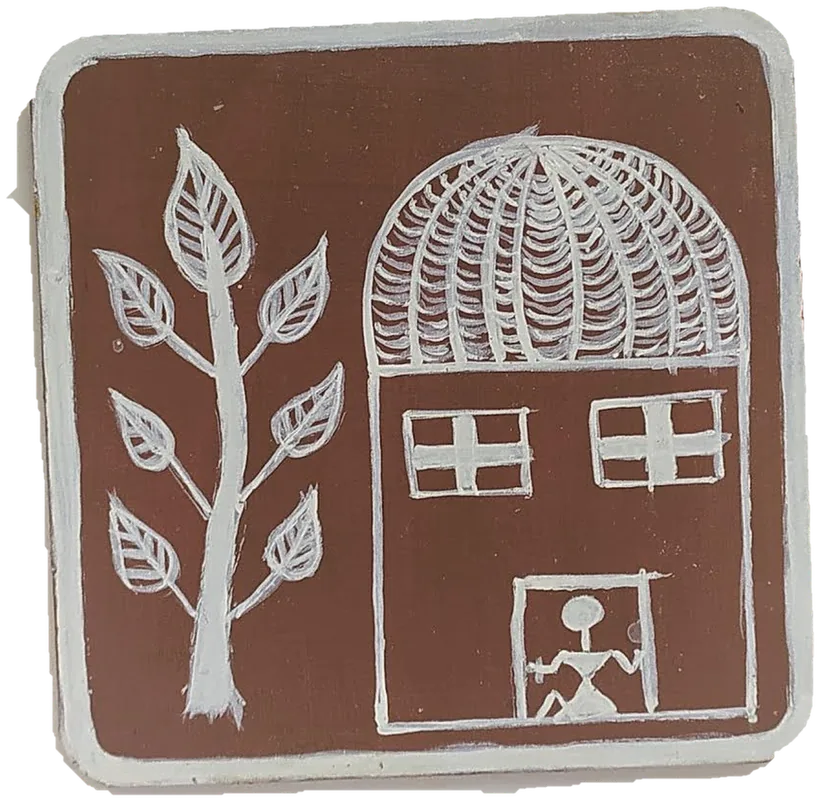
Two windows, one tree, and a house that looks lived-in rather than built.
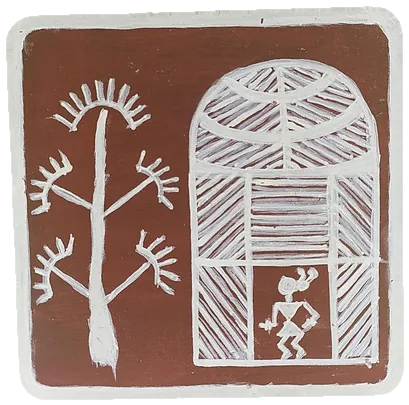
The same pairing, told again — in this tradition a good scene is allowed to repeat.
कामField & Labour
Warli painting was never meant to hang at a distance and be admired — it was made by people who spent their days sowing, grinding grain, and walking to the well, and it shows. Nobody in these scenes is posed; they're mid-task.
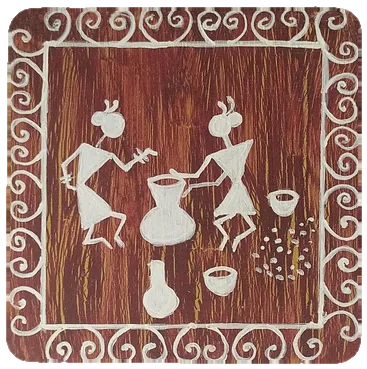
Two figures around a single pot — sharing the water, or sharing the walk it took to fetch it.
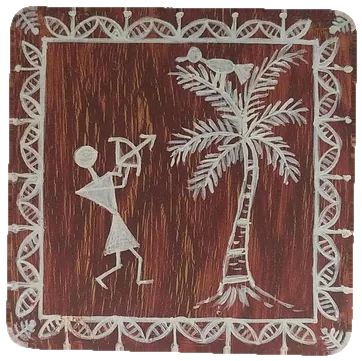
Bow drawn, one eye already on the bird that hasn't noticed him yet.
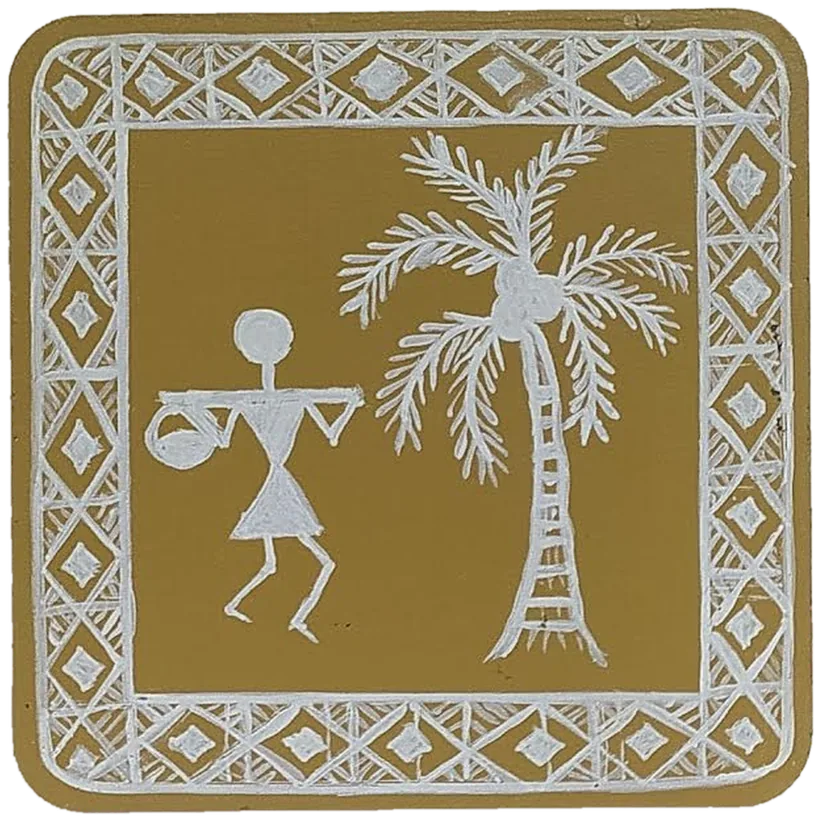
The palm tree marks the path home; the pot on the head keeps both hands free.
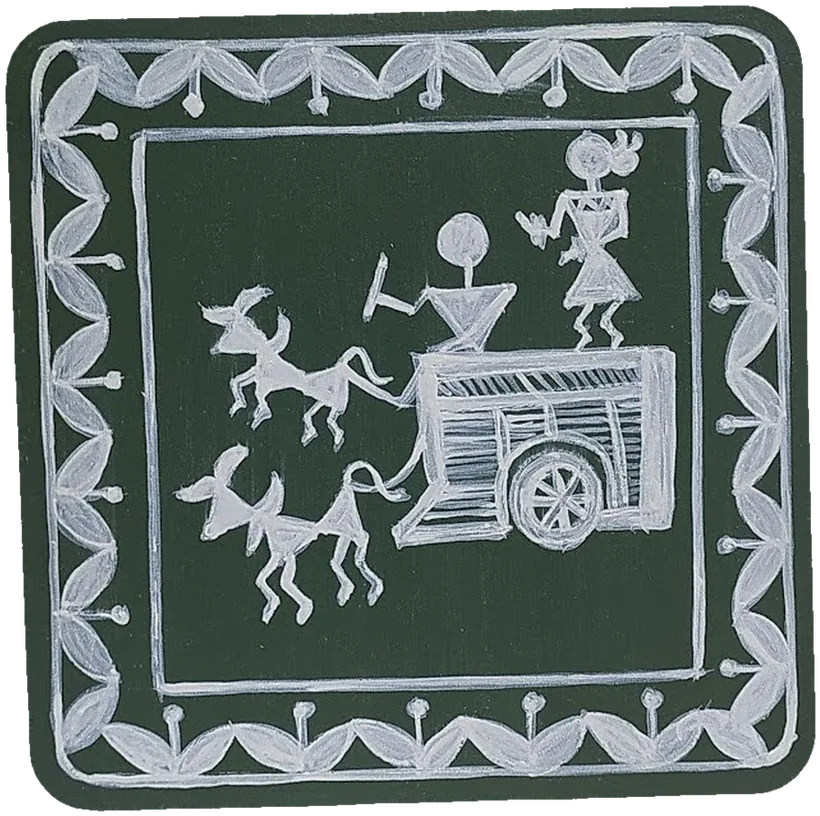
Two yoked pairs, a full cart, and someone riding the load rather than walking beside it — however the harvest gets to market, it gets there.
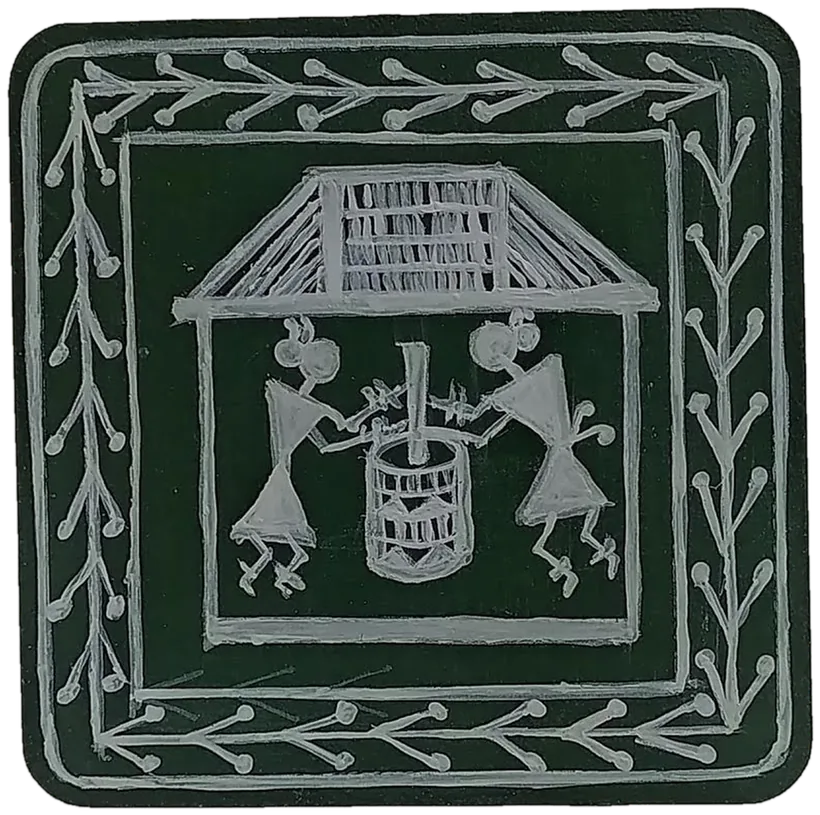
Grain pounded by two people working the same rhythm — alone, it takes twice as long.
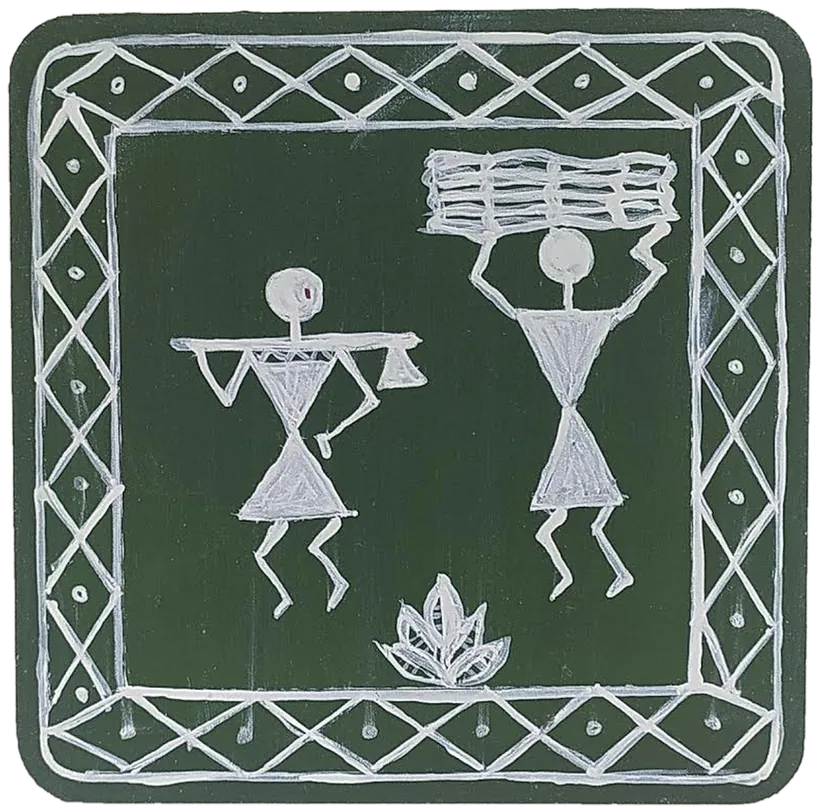
Baskets balanced, backs bent the same way — the posture of anyone who's ever carried a harvest home.
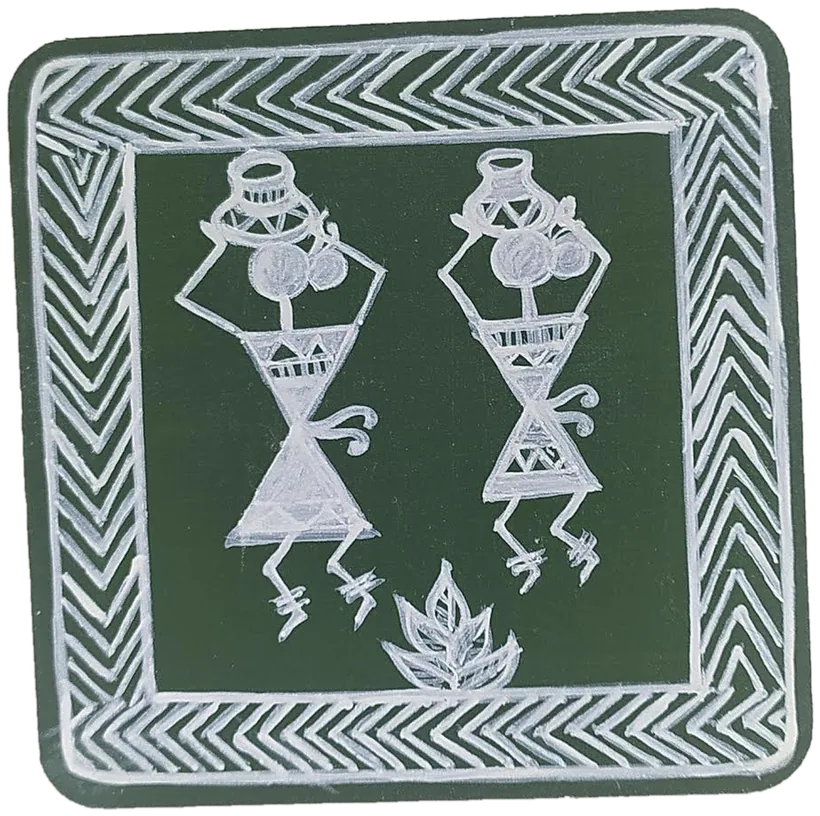
The well is never quite close enough, so the walk back always happens in twos.
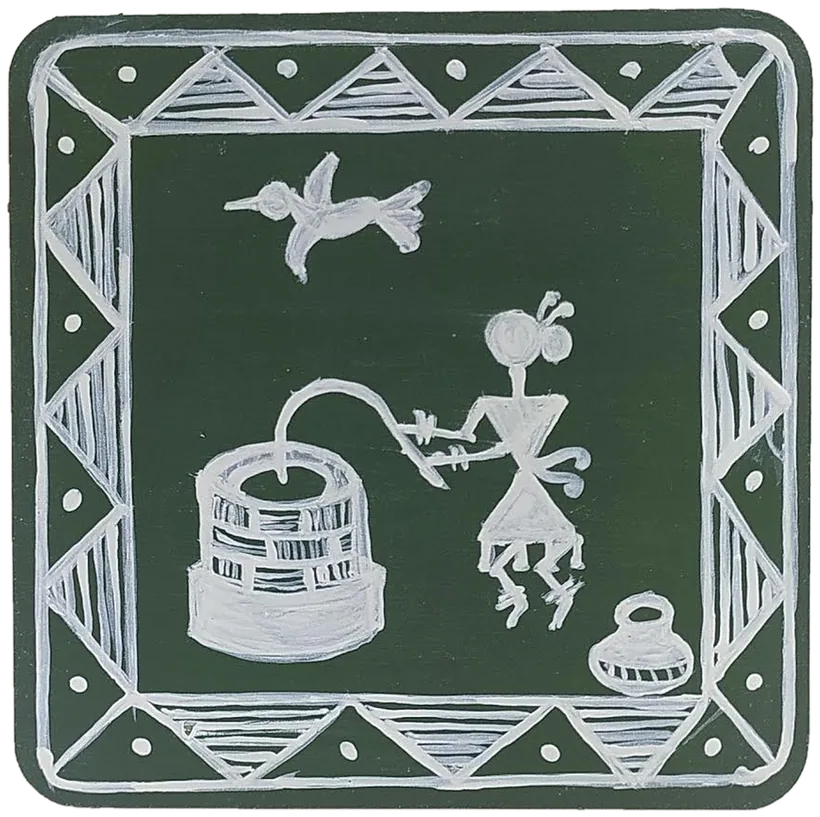
Rope in hand, the pot already on its way up — the well is the one place everyone in the village eventually stands.
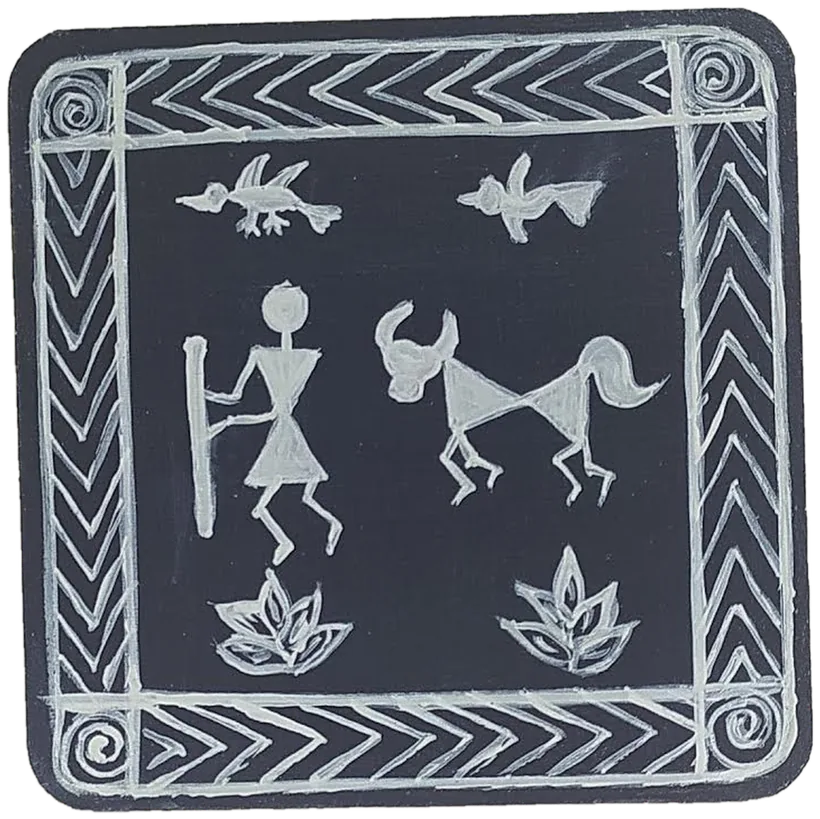
A farmer and a bull, drawn exactly the size of their friendship.
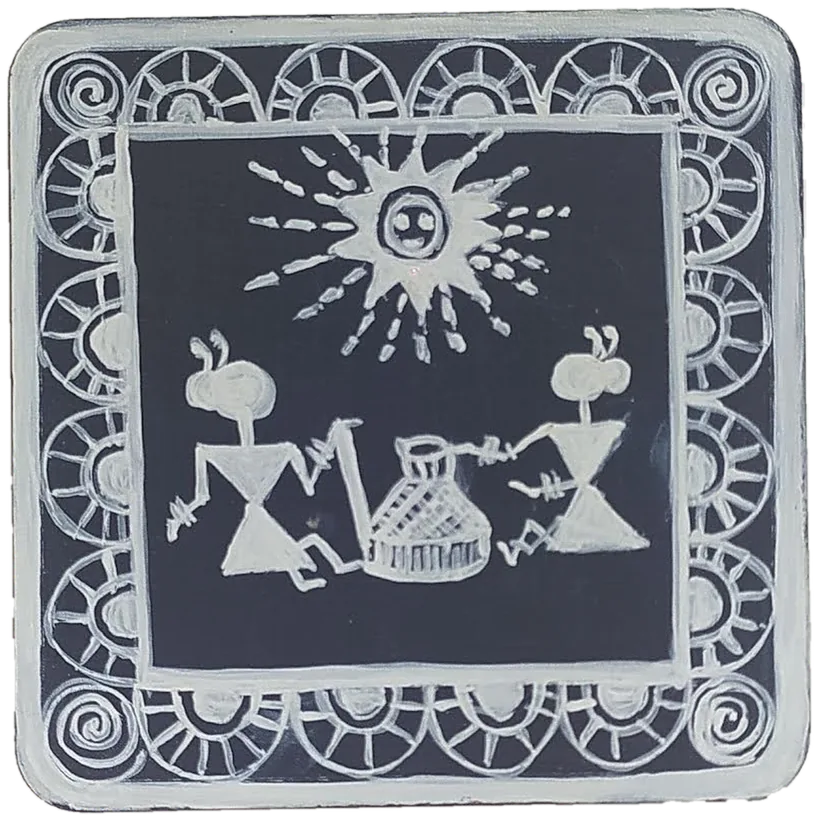
Midday, a pot between them, the sun directly overhead with nowhere else to be.
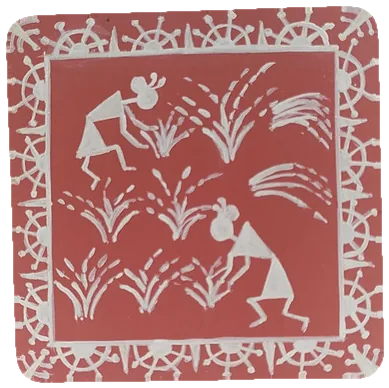
Seed going into the ground the old way — by hand, walking the field's length.
संसारCreatures & Sky
The Warli canvas always left room for whoever else was around — birds crossing the monsoon, a bull grazing at the frame's edge, creatures that don't need a person nearby to matter.
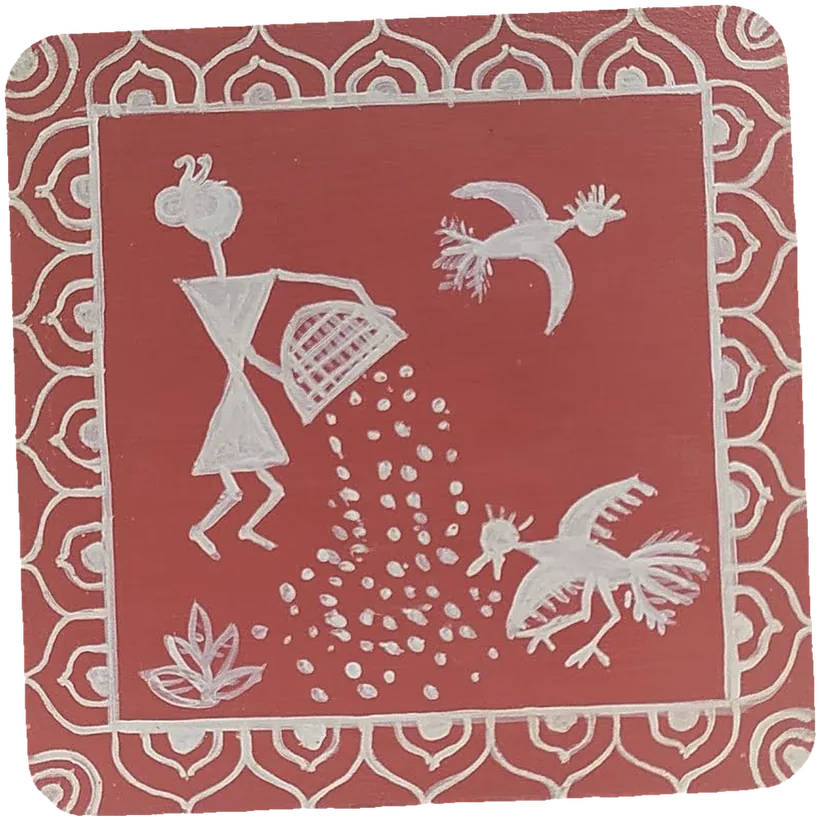
Rain falling as a trail of dots, and two birds crossing it anyway — nothing in a Warli monsoon waits for clear skies.
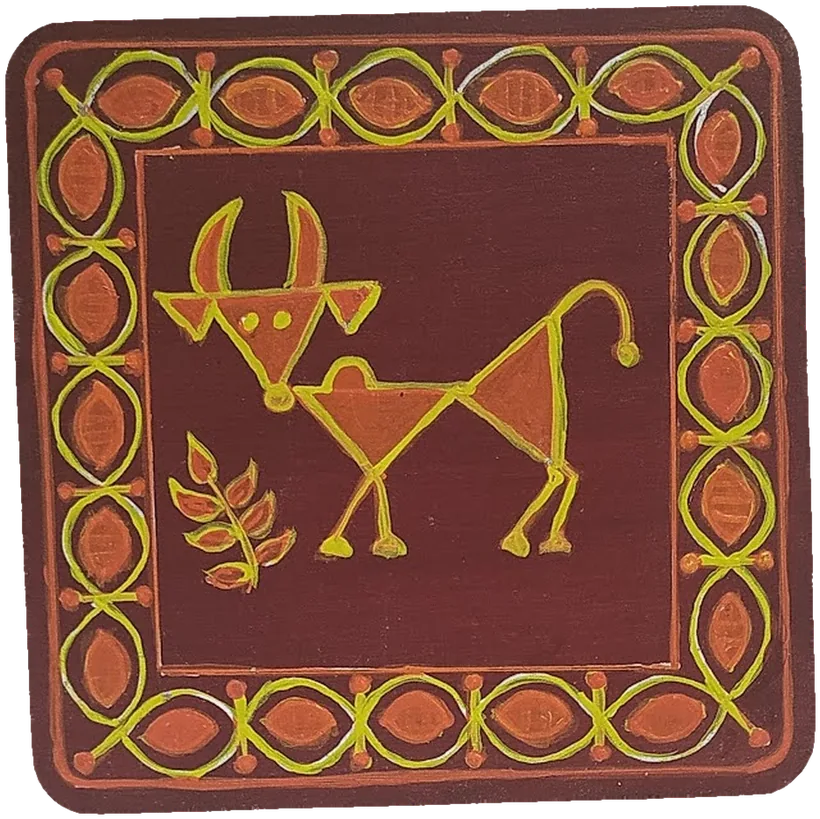
A bull standing for no reason except that a bull was there that morning.
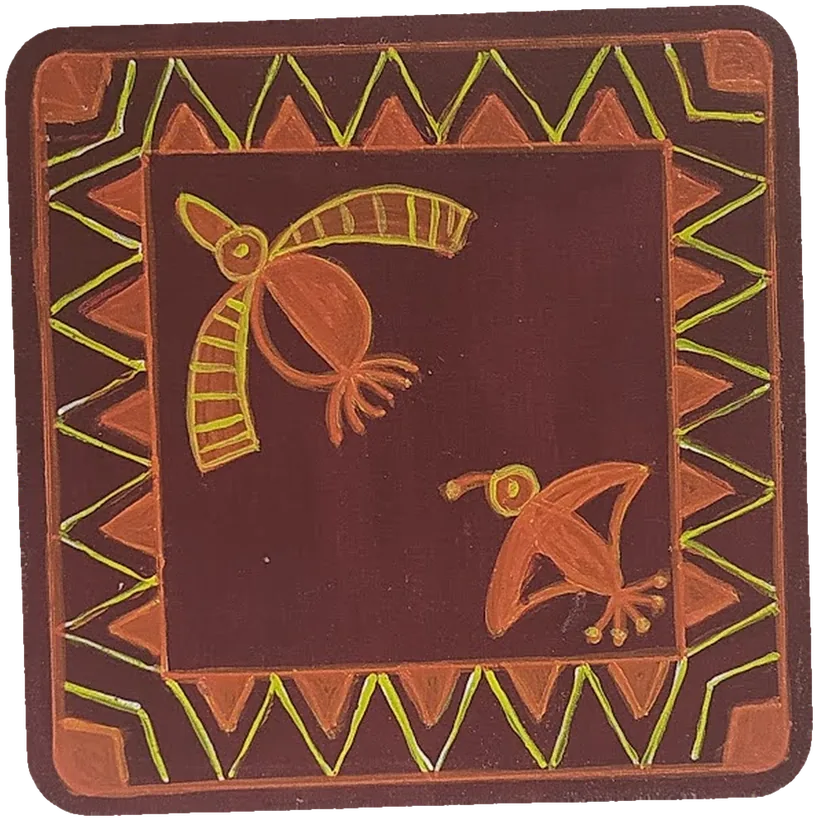
Two birds, one trailing the other, both turned the same way — Warli's shorthand for a pair that stays a pair.
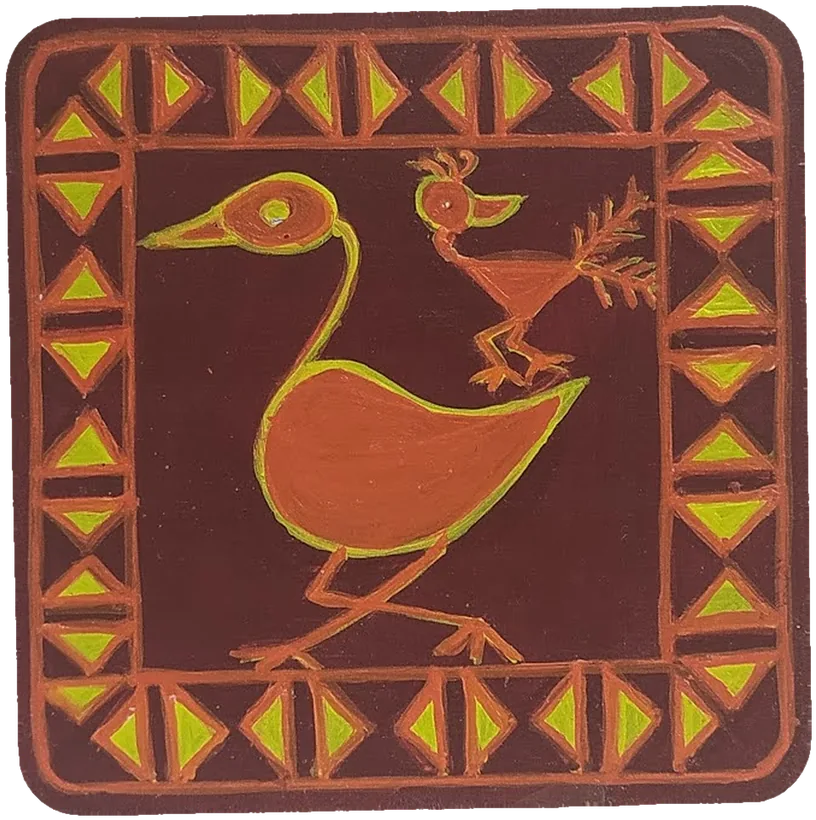
A goose and a smaller bird sharing one frame, the big shape and the little shape drawn kindly, side by side.
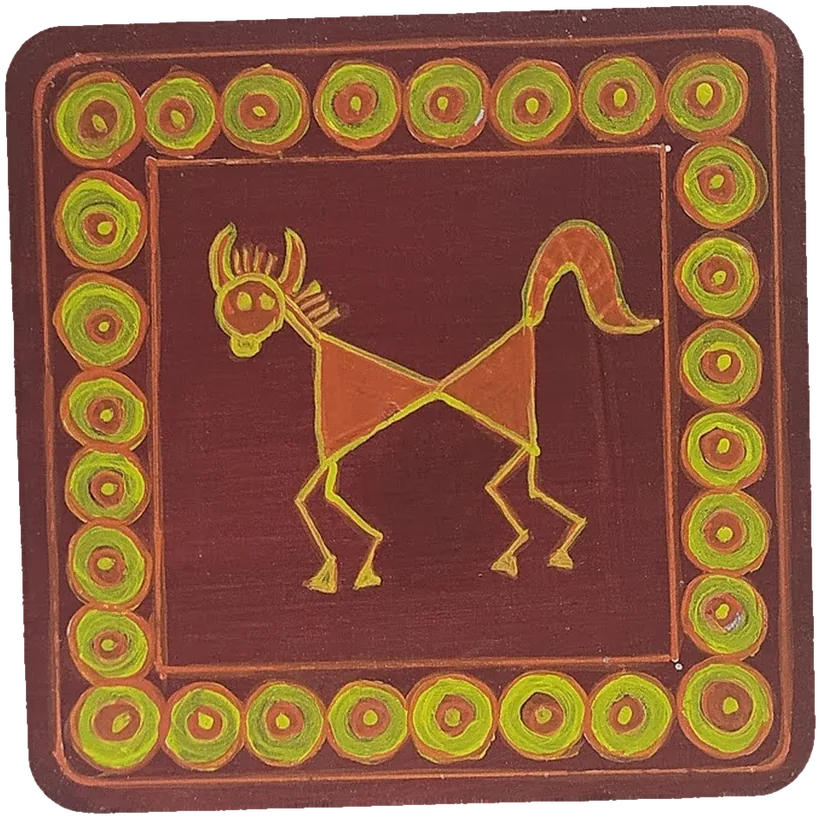
A horse mid-stride, tail thrown back as if running from nothing in particular.
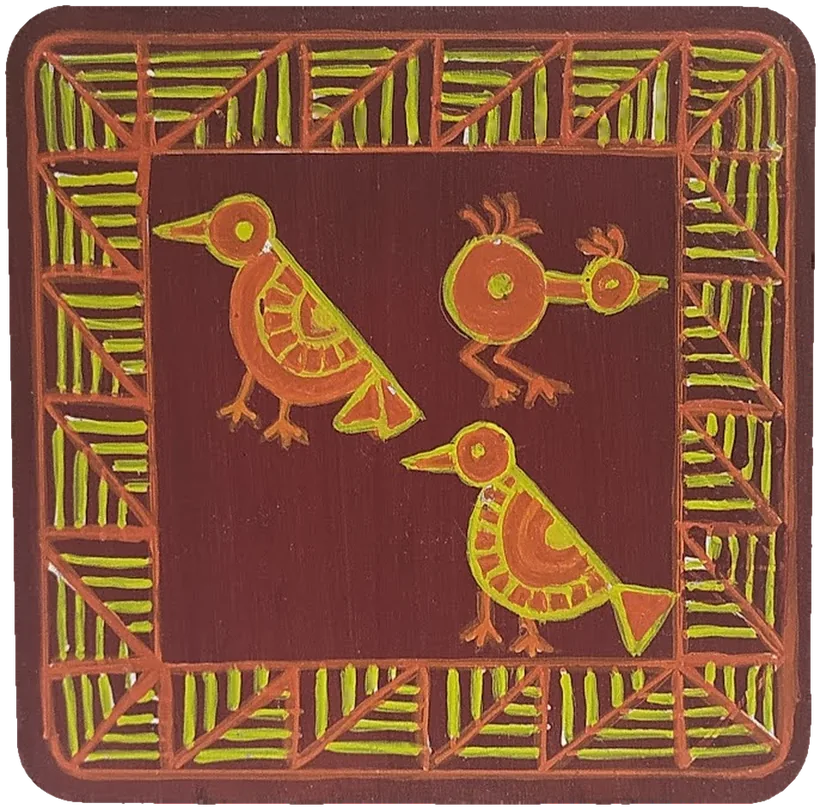
Three birds instead of the usual two — proof this was drawn from what she actually saw, not a fixed formula.
वृक्षदेवताThe Sacred Tree
Before a house, a dancer, or a field, Warli painting starts with a tree. Vrukshadevata, the tree deity, is drawn as the source everything else grows from — the one motif almost every Warli artist returns to first.
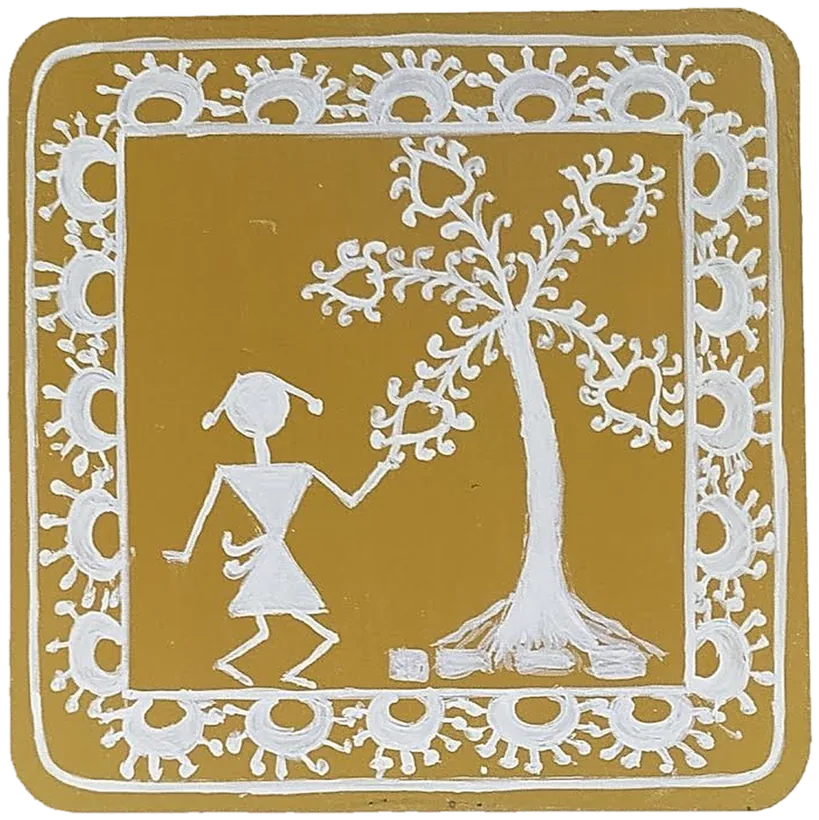
A tree in bloom, and someone standing close enough to notice.
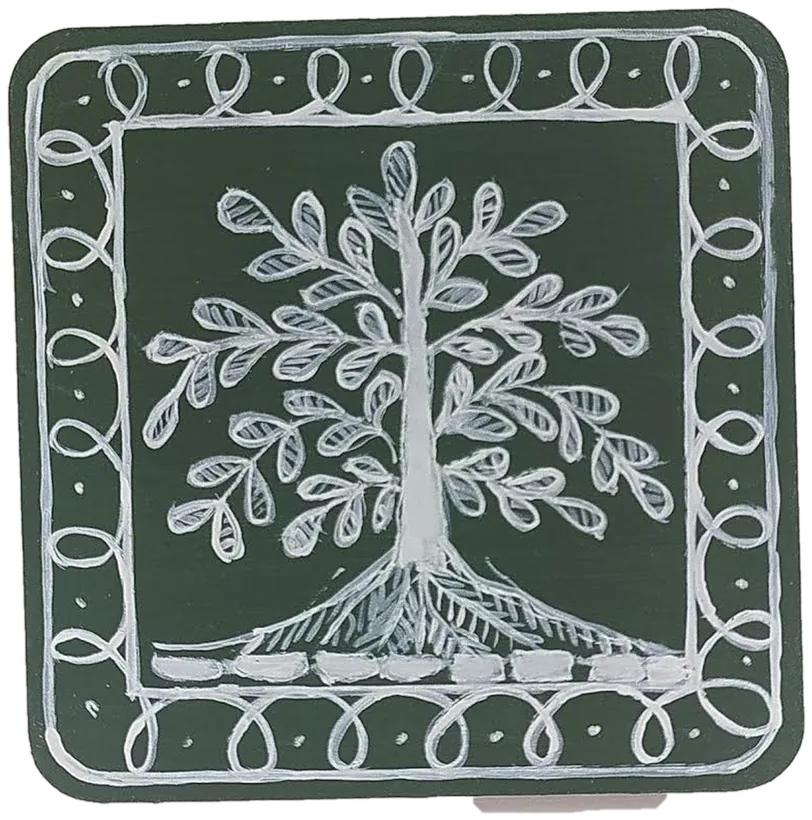
Roots drawn as carefully as branches — the tree that isn't decoration but the reason the rest of the scene gets to exist.
The Studio
Each piece starts as a plain tile, is drawn freehand, and is built up layer by layer in colour before being sealed under a glass-smooth coat that can take a hot mug without flinching. Nothing here comes from a mould — look closely across a set and no two are ever quite the same.
Painting is only one of the languages she works in. The same hand turns just as easily to embroidery, needlework, and craft of nearly every kind — always toward the same end, something made exquisitely rather than quickly. Commissions are open across mediums and themes, Rangvan included but never only Rangvan.
Wipe clean with a damp cloth. The resin seal takes a hot cup without staining, though it hasn't been tested in a dishwasher — treat each piece the way you'd treat a favourite plate.
Commission a Piece
Every design here can be repainted to order, in a set or on its own — or start something new entirely, in paint, thread, or another craft altogether. Reach out directly:
Prefer WhatsApp? Say so by email or DM and it'll come straight back to you that way.